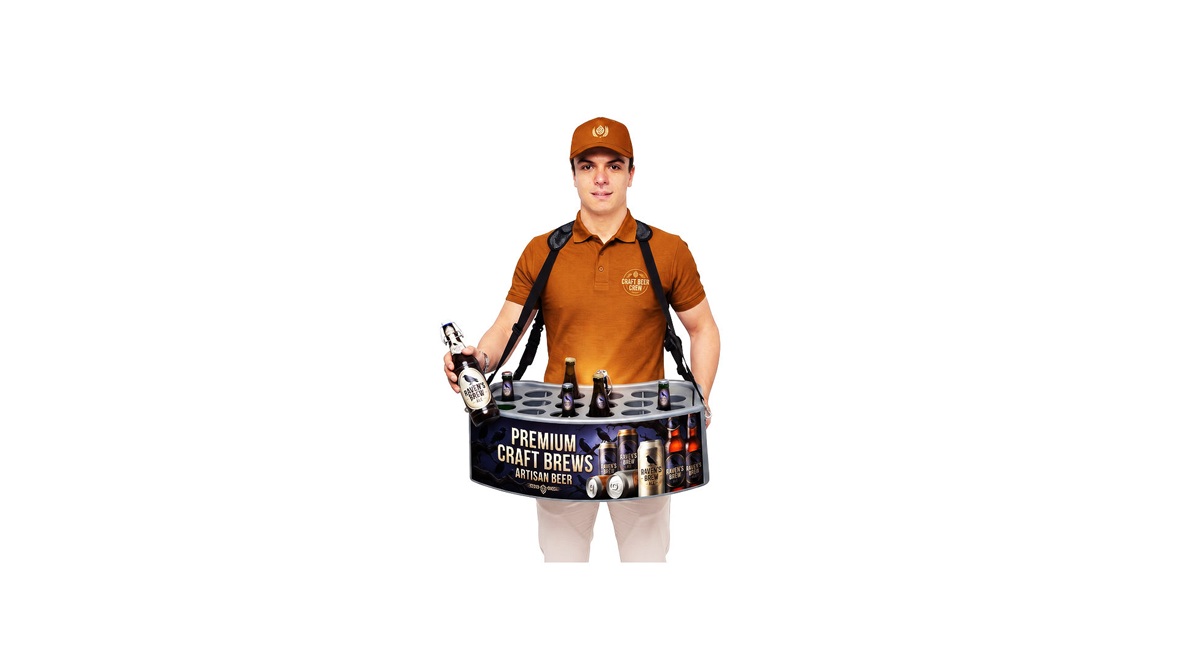
Leading the Way in London, New York, and Frankfurt Events
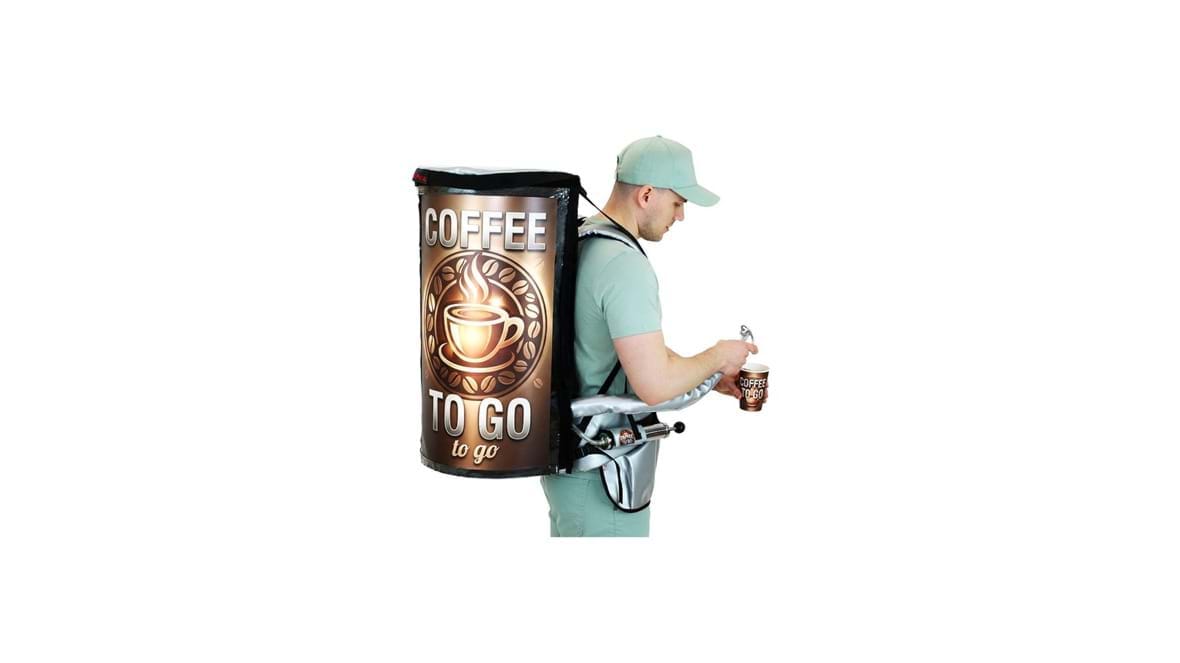
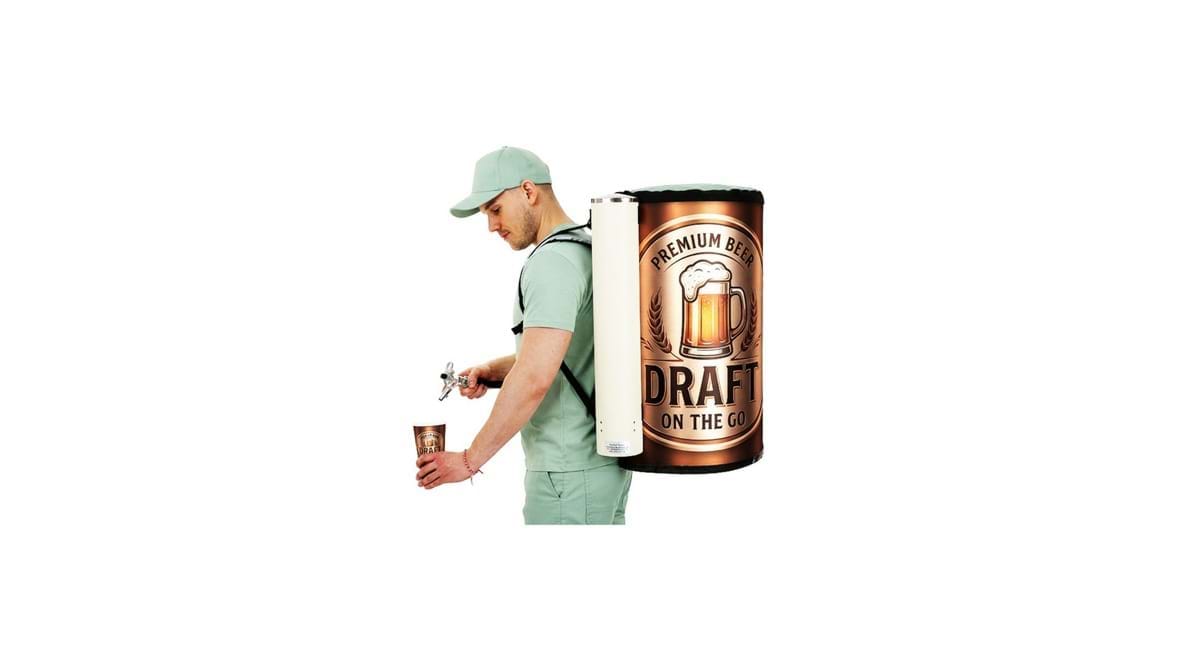
- The beverage backpack makes serving drinks on the go a breeze!
- Perfect for festivals, outdoor events, and parties.
- Keep your drinks cool and ready to serve.
Frequently Asked Questions About the Beverage Backpack Video
The video offers a visual introduction to mobile beverage dispensing with a backpack system. The following questions explain what the demonstration shows, which conclusions cannot be drawn from the footage alone and how the equipment should be prepared for a real event.
What does the beverage backpack video demonstrate?
The video shows the general concept of carrying a prepared beverage in a backpack and dispensing it directly to customers through a hose and hand-operated tap.
It provides a practical impression of mobile service away from a fixed counter. The footage represents one example and does not define the exact configuration required for every application.
What can I assess by watching the video?
The demonstration can help you understand how the backpack is positioned on the wearer, how the dispensing tap is handled and how the operator approaches customers.
It also gives an impression of the space required for walking, stopping and handing over a filled cup.
Does the video show the complete operating procedure?
No. A product video normally concentrates on the visible serving process. Beverage preparation, filling, technical inspection, strap adjustment, refilling and cleaning take place outside the filmed sequence.
These steps must be included in the event’s operating plan even when they are not visible in the video.
Can I identify the exact backpack model from the video?
Not reliably. Different models can have a similar external appearance while using different containers, taps, insulation and pressure equipment.
The intended beverage and operating conditions should be described before a particular configuration is selected.
Does the backpack prepare or mix the beverage?
No. The drink must be prepared before it is transferred into the beverage container. The backpack is designed for transport and dispensing rather than brewing, mixing, heating or carbonating the product.
Powder, concentrate and other ingredients should be mixed completely in a separate preparation vessel.
Why must the intended beverage be specified?
The beverage determines which container, tap and operating method are required. Still drinks and carbonated products do not use the same technical configuration.
The ingredients and finished consistency are also important because particles, pulp, sediment or thick components may restrict the hose or tap.
Can still beverages be dispensed without a pressure system?
Suitable non-carbonated beverages can normally be dispensed by gravity from an appropriate configuration. The drink flows from the elevated container through the hose when the tap is opened.
A manual pump or CO2 supply is generally unnecessary for a system used exclusively with compatible still beverages.
What changes when the beverage contains carbonation?
Beer, cola and other carbonated drinks require a pressure-compatible container and suitable pressure equipment. Depending on the configuration, this can be a hand-operated pump or a compatible CO2 system.
Pressure equipment must not be attached to a gravity container that was not designed for pressurized operation.
Does the video confirm compatibility with every drink?
No. The footage demonstrates the mobile dispensing concept but cannot confirm that every beverage will flow correctly through the system.
Products containing fruit pieces, coffee grounds, loose tea leaves, seeds, thick foam or undissolved ingredients require an individual assessment.
Does the beverage backpack actively cool the drink?
No. The system uses insulation to slow down temperature changes but does not contain an active refrigeration unit.
Cold beverages must be chilled before filling. The prepared backpack should not remain unnecessarily in direct sunlight or another warm location before service.
Can hot beverages also be carried?
Suitable hot, non-carbonated drinks can be used in an appropriate configuration. The beverage must be prepared at the required temperature before it is placed in the container.
For repeated professional hot-drink service, a stainless-steel container is generally preferable. Staff must follow a safe filling and handling procedure for hot liquids.
Can the temperature-retention time be determined from the video?
No. A short recording does not provide a reliable measurement of beverage temperature over an entire service period.
The result depends on the backpack model, starting temperature, filling quantity, surrounding conditions and frequency of dispensing. A practical test under the expected event conditions is recommended.
Why should the actual beverage be tested before an event?
Water can confirm that the basic liquid path is open, but it does not reproduce the behaviour of carbonated, sweetened or more viscous drinks.
A final test with the intended beverage helps identify unsuitable flow, foam formation, dripping or residue before customers are served.
What should be checked before the backpack enters the service area?
- Correct beverage and filling quantity
- Secure container closure
- Properly connected hose and tap
- Correctly installed pressure equipment, where required
- No visible leakage
- Controlled beverage flow
- Clean exterior and dispensing components
- Correct adjustment of the carrying straps
- Sufficient compatible cups
The operator should begin serving only after the complete system has passed this functional check.
Should the operator dispense while walking?
No. The wearer should stop in a stable position before opening the tap. This provides better control over the cup and reduces the risk of spills.
The selected serving position should also leave enough space for the customer and other visitors to pass safely.
How should the tap be carried between customers?
The tap should be returned to its intended holder or carrying position after each serving. It should not swing freely or touch the floor, clothing or surrounding objects.
The hose must be routed so that it does not become kinked or catch on barriers, furniture or event equipment.
Does the video prove a particular serving rate?
No. The number of servings per hour cannot be determined from the visible liquid flow alone.
The complete service cycle includes approaching customers, preparing the cup, dispensing the beverage, handling payment or product information and moving to the next location.
How should the operator’s route be planned?
The route should cover areas where mobile service provides a practical benefit and where the wearer has enough room to move, turn and stop.
Emergency exits, narrow stairways, restricted zones and heavily congested passages must remain clear. The operator also needs safe access to the refill station.
Can the system be used in queues and waiting areas?
This may be possible when the venue approves beverage service and sufficient space remains for safe movement.
The vendor must not obstruct the queue, entrance or emergency route. The organizer should also plan how customers receive cups, lids and other service items without creating additional congestion.
How should the backpack be adjusted to the wearer?
The shoulder straps and waist belt must be fitted individually. The filled backpack should sit close to the body and remain stable during walking and dispensing.
The adjustment should be checked at the intended operating weight because an empty backpack has a different weight distribution.
Can different employees use the same backpack?
Yes. Each operator must receive practical instruction, and the carrying system must be readjusted whenever the wearer changes.
The new operator should also be informed about the beverage, remaining quantity, assigned service area and next planned refill.
Why is a refill station necessary?
The refill station provides a controlled area for preparing the beverage system away from visitors. The backpack can be placed securely while the container is filled and the connections are inspected.
The station should provide the prepared beverage, clean filling equipment, cups, required accessories and materials for handling minor spills.
Can the backpack be refilled while it is being worn?
No. The system should be removed and placed on a stable surface before the beverage container is opened or filled.
This is especially important for hot liquids and reduces the risk of spills, contamination and incorrect closing of the container.
How can the remaining beverage quantity be estimated?
The expected number of servings can be calculated from the actual filling quantity and selected cup volume.
The calculation should allow for test pours, foam, spills, partially filled cups and a small quantity remaining inside the container and hose.
Which cups can be carried with the backpack?
A compatible universal cup dispenser can be used with many disposable and reusable cups. The cup capacity, outside rim diameter and overall shape must match the dispenser.
Cups with handles, unusual rims or strongly tapered sides should be checked with a physical sample before the event.
Can the backpack be used for product sampling?
Yes. The system can distribute small tasting portions as well as regular beverage servings.
For a sampling campaign, the organizer should define the sample volume, expected number of recipients, refill intervals and method for providing ingredient or allergen information.
Can beverages also be sold directly by the operator?
Yes. The purchaser can incorporate the backpack into a mobile sales concept. A separate card terminal, cash solution, voucher system or other payment method can be organized by the event operator.
Payment equipment is not included as a standard component of the beverage backpack.
Does the backpack guarantee shorter queues or higher sales?
No. The system creates an additional mobile serving point, but it cannot guarantee a particular reduction in waiting time, number of customers or financial result.
The outcome also depends on the venue, beverage demand, number of operators, refill logistics, pricing and organization of the complete service.
Can advertising graphics be displayed on the backpack?
Depending on the selected model, printed paper graphics can be inserted behind transparent display surfaces. These areas may present a beverage brand, sponsor, campaign message or product identification.
The dimensions vary between models and should be confirmed before final artwork is prepared. Graphic design and printing are not automatically included.
Can the same backpack be used for another beverage later?
A compatible system can be used for different suitable products at separate times. Before changing the beverage, the container, outlet, hose, fittings and tap must be cleaned correctly.
When several drinks are offered simultaneously, separate and clearly labelled systems are normally easier to manage.
What should happen if the beverage flow changes?
The operator should stop serving if the flow becomes irregular, the tap begins to leak or a connection moves.
The backpack should be returned to the preparation station. Possible causes include a kinked hose, residue inside the tap, insufficient pressure, a low beverage level or an incorrectly fitted container closure.
How should the system be cleaned after the demonstration?
Remaining beverage should be emptied before residue can dry. The container, outlet, hose, connectors and internal passages of the tap must all be included in the cleaning process.
A suitable beverage-system cleaning product can be used according to its instructions. The complete liquid path must then be rinsed thoroughly with clean water and allowed to drain and dry.
Does cleaning only the beverage container clean the complete system?
No. The drink also contacts the outlet, hose, fittings and dispensing tap. Residue can remain in these components even when the visible inside of the container appears clean.
Cleaning and rinse water must therefore pass through the entire beverage path.
Does the video replace staff training or operating instructions?
No. The footage provides a visual introduction to mobile beverage service but does not explain every filling, handling, inspection and cleaning step.
Operators should follow the instructions for the selected model and complete a practical test with the actual beverage before working independently.
What information is needed when requesting the system shown in the video?
Please describe the planned application rather than referring only to the appearance of the filmed backpack.
- Type and brand of beverage
- Relevant ingredients and finished consistency
- Still or carbonated drink
- Hot or cold service
- Required number of backpacks
- Preferred capacity or expected serving volume
- Available filling or keg connection
- Manual pump or CO2 preference
- Cup capacity, rim diameter and shape
- Required accessories
- Indoor or outdoor venue
- Expected duration of each service period
- Requested delivery date
- Destination country, postal code and city
These details help determine which available beverage backpack model and configuration may be suitable.
Take advantage of tailored marketing tools, including custom email blasts, social media promotions, and personalized outreach, to ensure that your business maximizes its exposure before, during, and after the event.