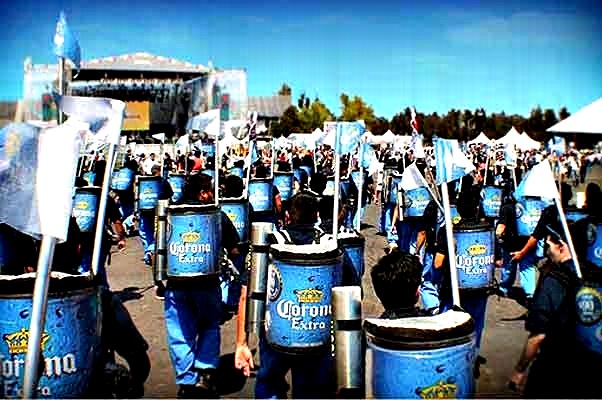
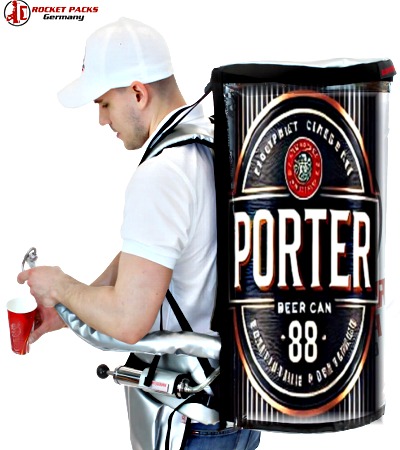
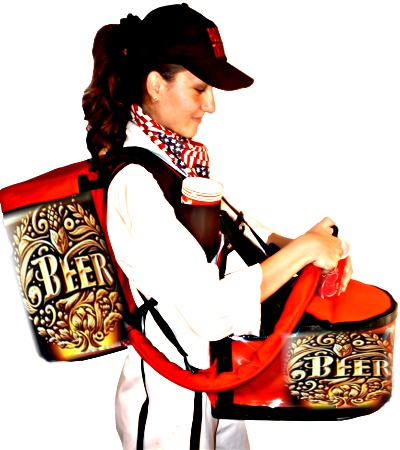
A beverage dispensing backpack must be matched to the drink rather than selected by capacity alone. Ingredients, carbonation, serving temperature and the planned refill process determine which container, tap and pressure equipment are suitable.
The following answers help you narrow down the required configuration and avoid ordering equipment that does not match the intended beverage.
Which beverages are suitable for a dispensing backpack?
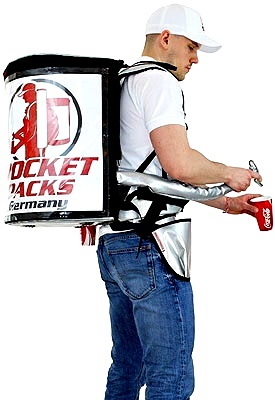
Rocket Packs systems are designed primarily for clear, low-viscosity beverages that can pass freely through the container outlet, hose and tap.
Typical applications include water, juice without pulp, soft drinks, beer, coffee, tea and other sufficiently fluid beverages. The exact equipment depends on whether the drink is still or carbonated and whether it will be served hot or cold.
Which drinks require an individual compatibility assessment?
A closer assessment is necessary when the finished beverage contains pulp, fruit pieces, seeds, coffee grounds, loose spices, substantial sediment or other solid ingredients.
Particularly thick recipes may also flow too slowly or obstruct internal passages. In such cases, provide the ingredient list and describe the consistency before selecting a backpack.
Why is the finished beverage recipe important?
Two drinks with similar names can behave differently inside the dispensing system. Sugar, syrup, milk, stabilizers and suspended ingredients can affect flow, residue formation and cleaning requirements.
The compatibility assessment should therefore be based on the finished recipe that will actually be served, not only on the general beverage category.
How does the dispensing method differ for still and carbonated drinks?
Suitable still beverages can normally be dispensed by gravity. Opening the tap allows the liquid to flow from the elevated container through the hose.
Beer, cola and other carbonated beverages require a pressure-compatible container and an appropriate pressure source. A gravity configuration should not be used for a carbonated drink without the required technical equipment.
What is the purpose of the manual pressure pump?
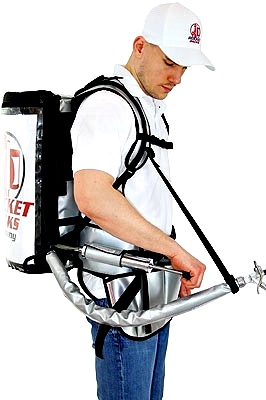
The hand-operated pump generates the pressure needed to move a carbonated beverage from the container to the tap. The operator adds pressure as required during service.
The pump is a cost-effective alternative to a CO2 configuration. It does not cool the beverage and does not actively control its temperature.
What does the optional CO2 kit change?
A compatible CO2 kit supplies dispensing pressure automatically and reduces the need for repeated manual pumping. It can be useful when a more continuous pressure supply is preferred.
The CO2 equipment does not provide refrigeration and does not automatically improve the carbonation of a beverage that was filled or stored incorrectly.
Which tank material is suitable for my application?
A food-compatible plastic tank offers an economical solution for selected beverages and occasional use. Repeated contact with strongly coloured or aromatic drinks may leave visible staining or residual aroma over time.
Stainless-steel tanks are generally preferable for frequent professional use, coffee, tea and other hot beverages. They are also easier to assess during cleaning when different drinks are used in the same system.
How do the Basic, Premium and Pro configurations differ?
The Basic range uses a plastic beverage container and provides an economical entry into mobile dispensing. Premium models use a stainless-steel tank and provide improved insulation.
Pro models combine a stainless-steel container with an additional insulation sleeve and a more stable backpack construction. The appropriate version depends on the beverage, frequency of use, required capacity and expected carrying period.
Does the backpack actively heat or refrigerate the drink?
No. Beverage backpacks use insulation but do not contain an active heating or refrigeration unit.
The drink must be brought to the required serving temperature before filling. Depending on the selected model and operating conditions, the insulation can slow temperature changes for approximately one to four hours.
Should I select an 11-litre or 19-litre stainless-steel system?
An 11-litre model is generally easier to handle and may be suitable when the operator must walk longer distances or can return regularly to a refill point.
A 19-litre system provides more beverage capacity but also creates a substantially higher loaded weight. The decision should consider the route, service duration, wearer and available refill facilities.
Does the nominal tank capacity equal the usable beverage volume?
For still beverages, the practical filling quantity is determined by the container and the planned handling process. For carbonated drinks, sufficient free space must remain above the liquid for pressure operation.
The number of servings should therefore be calculated from the planned filling quantity rather than from the model name alone. Test pours, foam and residual beverage should also be taken into account.
What is the difference between the Standard Tap and Premium Tap?
The Standard Tap provides a straightforward opening and closing function for suitable beverages.
The Premium Tap includes a compensator that allows the wearer to regulate the flow directly at the dispensing point. This is particularly useful for beer and other carbonated beverages but can also provide additional control with different cup sizes.
Does the tap dispense a fixed portion automatically?
No. Both tap versions are operated manually. The wearer opens the tap, observes the filling level and closes it when the required quantity has been dispensed.
Consistent portions are easier to achieve when one cup size and one defined filling level are used throughout the service period.
Which cups are compatible with the universal cup dispenser?
The universal cup dispenser is suitable for many cups with capacities from approximately 100 to 550 millilitres and outside rim diameters between approximately 60 and 95 millimetres.
The cup shape is also important. Cups with handles, unusual rims or strongly tapered sides may not fit correctly. A sample cup should be checked before a larger quantity is purchased.
Can one backpack be used for different beverages?
Yes, provided that every beverage is compatible with the container, hose, tap and operating method. The complete beverage path must be cleaned before changing from one product to another.
For simultaneous service of several drinks, separate and clearly identified backpacks are usually easier to manage than repeated product changes in one system.
How should an unfamiliar beverage be tested?
Prepare the original recipe and fill a limited quantity into the selected system. The test should check whether the beverage flows evenly, leaves excessive residue or contains ingredients that collect near the outlet or tap.
The test should also use the intended serving temperature and cups. Water alone cannot reproduce the behaviour of every finished beverage.
What information is required for a suitable product recommendation?
Please provide enough information to assess the complete dispensing application:
- Type and brand of beverage
- Ingredient list for unusual recipes
- Still or carbonated drink
- Hot or cold service
- Required number of backpacks
- Preferred capacity or servings between refills
- Available beverage source or keg connection
- Manual pump or CO2 preference
- Cup volume, rim diameter and shape
- Expected duration of each mobile service period
- Delivery country and postal code
- Requested delivery date
If no model has yet been selected, describe the beverage, venue and refill process. This allows Rocket Packs to assess which available dispensing backpack and accessories are appropriate for the project.