The price list helps you compare beverage backpack models, dispensing versions and optional equipment. To obtain an accurate total price, the selected system must be matched to the beverage, required quantity and delivery destination.
How should I use the downloadable price list?
Use the document as an initial overview of the available product categories, capacities and equipment options. It helps you identify which models may be relevant before requesting a formal quotation.
The price list is not an online shop or automatic order confirmation. Current prices, availability and transport costs must be checked for each enquiry.
Why can the same backpack model appear in different versions?
A backpack may be offered in separate configurations for still and carbonated beverages. The outer design and nominal capacity can be similar, while the container, pressure equipment and tap configuration differ.
When requesting a price, always state the intended beverage rather than providing only the model name.
What does “non-carbonated beverages” mean in the price list?
This version is intended for suitable still drinks that can be dispensed without a separate pressure supply. Depending on the selected model, applications may include water, filtered coffee, tea or non-carbonated soft drinks.
The finished beverage must be sufficiently fluid and free from ingredients that could obstruct the outlet, hose or tap.
Why does a version for carbonated beverages have different equipment?
Beer, cola and other carbonated drinks require a pressure-compatible system. The corresponding configuration may include a manual pressure pump and other components that are not required for normal gravity-fed service.
A lower-priced still-beverage version should not be selected for a carbonated drink solely because the backpack size appears identical.
Why should I not compare models by capacity alone?
The nominal tank volume is only one selection criterion. Container material, insulation, backpack construction, empty weight, tap and pressure method also influence the price and practical use.
A smaller system may be more suitable when the wearer must walk longer distances, while a larger model can reduce the number of refills.
How do the Basic, Premium and Pro ranges differ?
Basic models provide an economical entry-level configuration with a food-compatible plastic container. Premium models use a stainless-steel beverage container in a standard backpack construction.
Pro models combine a stainless-steel container with additional insulation and a reinforced carrying structure. The appropriate range depends on the beverage, frequency of use and expected service conditions.
Why is the container material relevant to the price?
Plastic containers provide a lower-cost solution for selected applications. Strongly coloured or aromatic beverages may leave visible staining or residual aroma after repeated use.
Stainless-steel containers are generally preferable for frequent professional use and for hot beverages such as coffee or tea.
What is the price difference between a Standard Tap and a Premium Tap based on?
The Standard Tap provides a straightforward manual opening and closing function. The Premium Tap includes a compensator that allows the operator to regulate the beverage flow directly at the tap.
The Premium Tap is particularly useful for carbonated drinks and applications requiring more precise flow control. Neither version automatically measures a fixed portion.
Does the displayed product price include all accessories shown in the pictures?
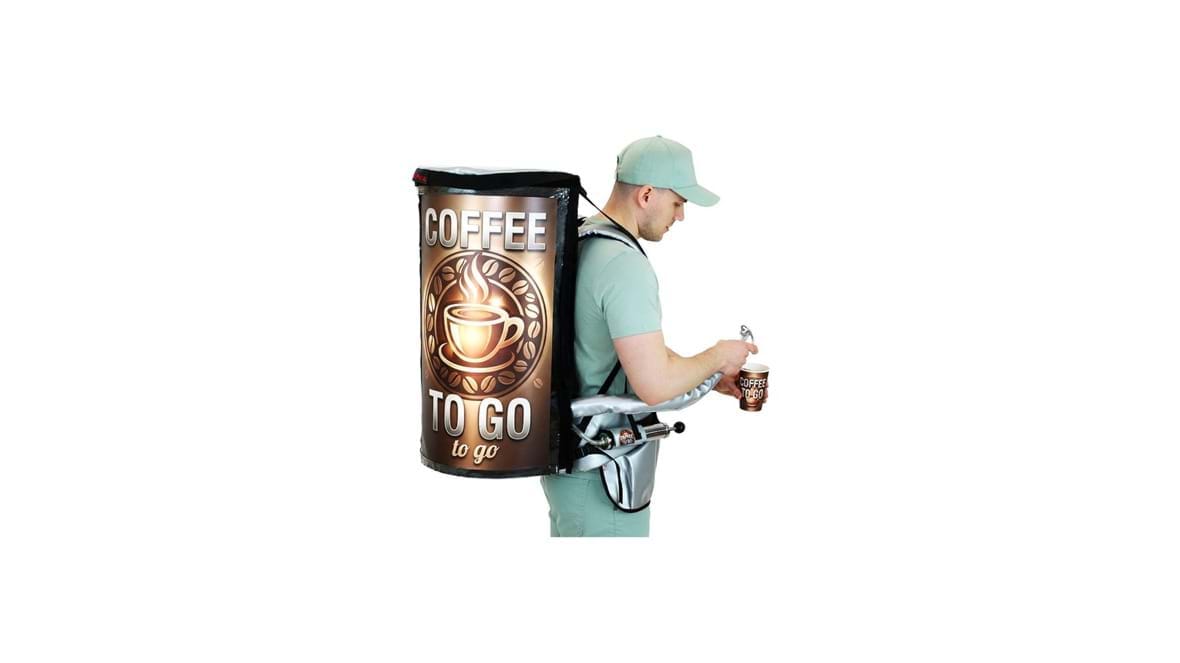
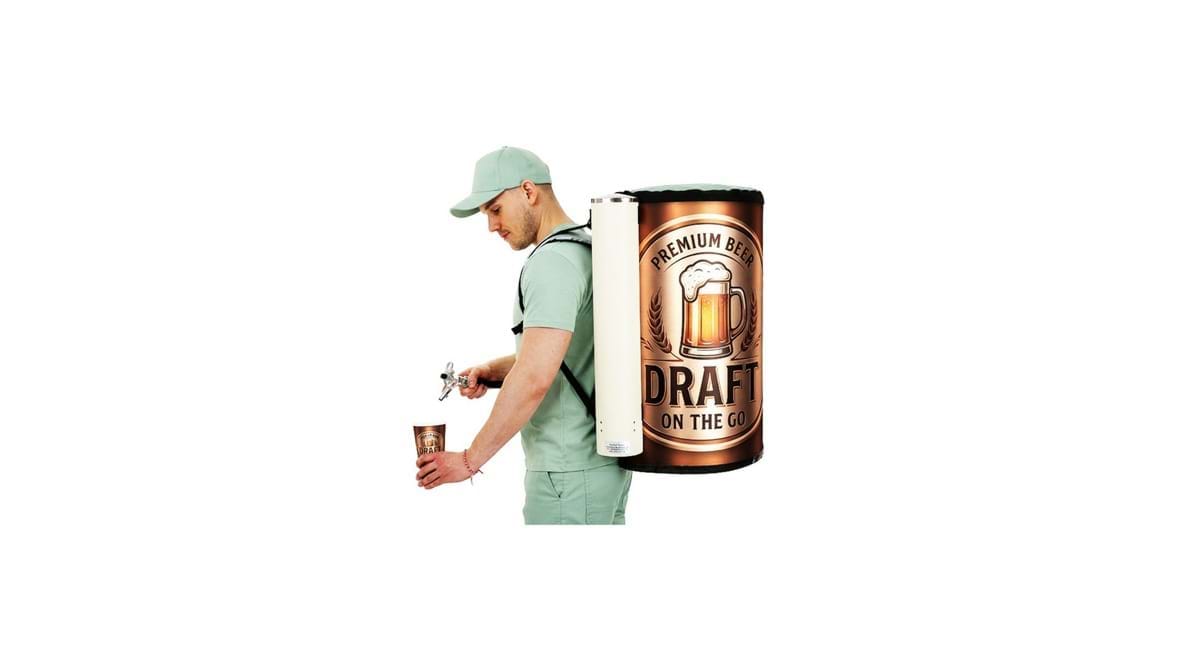
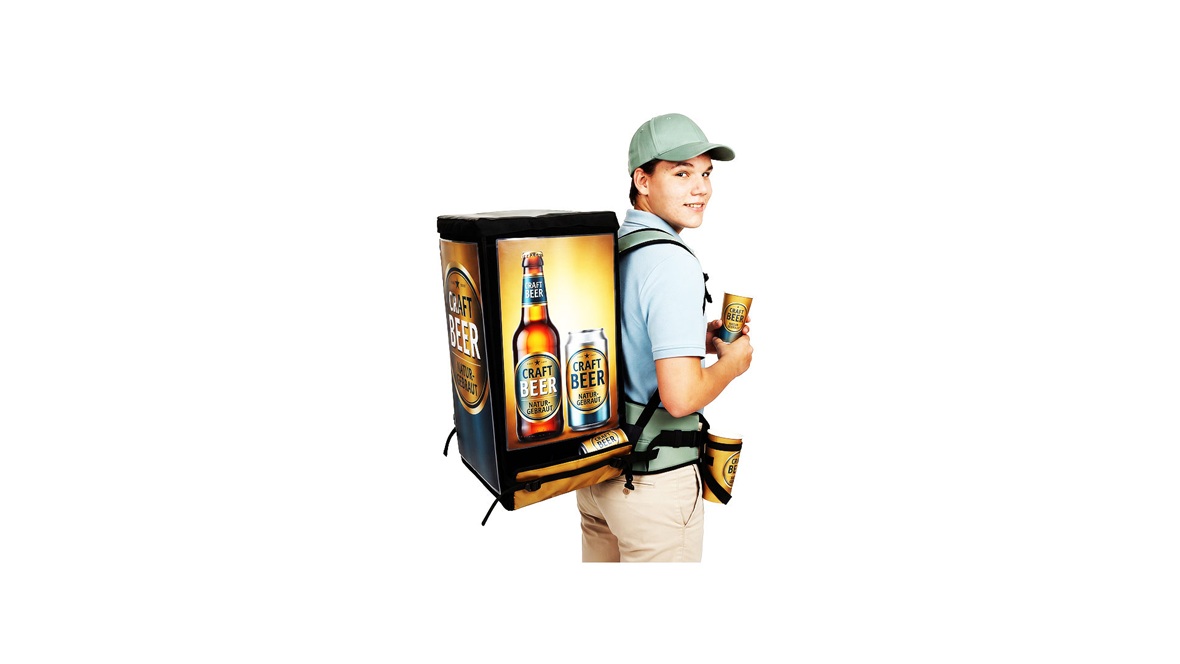
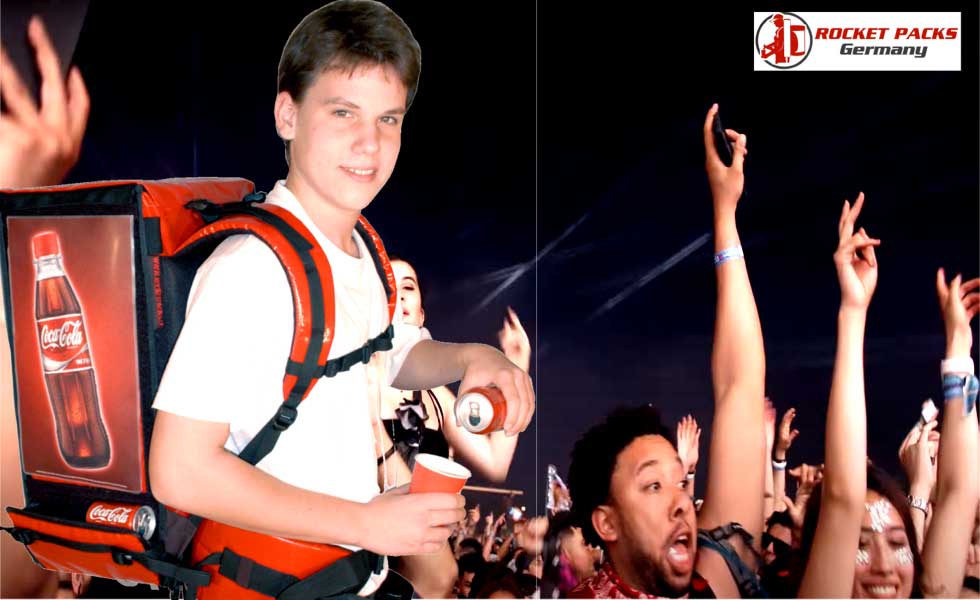
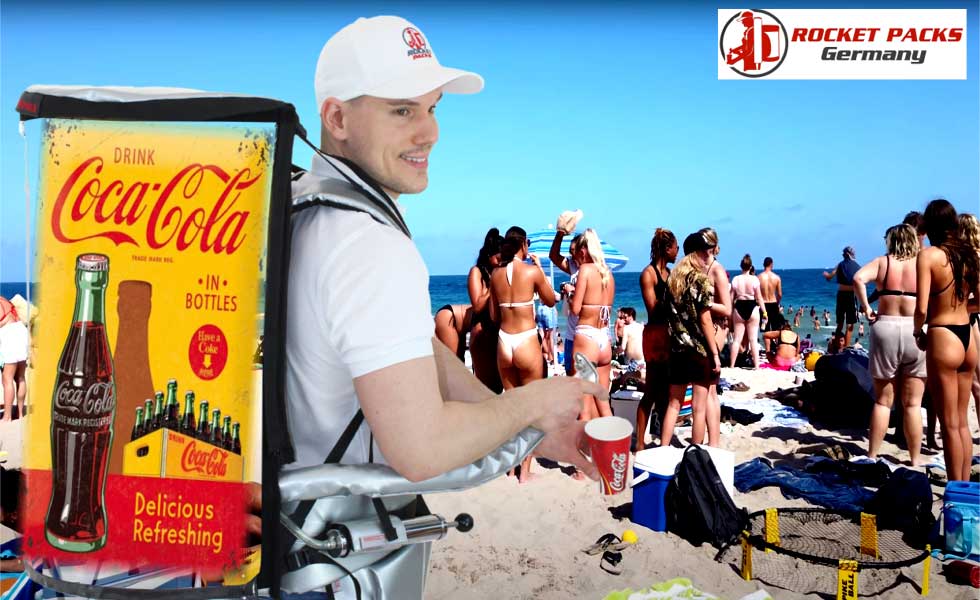
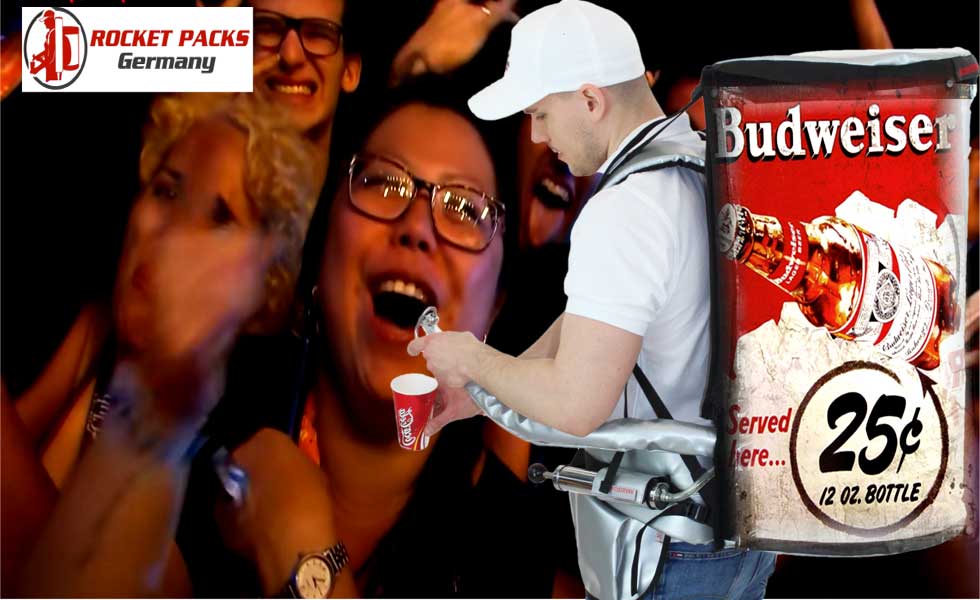
Not necessarily. Product images may show a backpack together with optional equipment or application examples.
The individual quotation should specify exactly which components are included, such as the tap, cup dispenser, pressure equipment, filling accessories, apron or promotional flag.
Which accessories may need to be added to the project budget?
The required accessories depend on the beverage source and serving procedure. Possible additions include:
- Manual pressure equipment
- Compatible CO2 equipment
- Filling or overflow lines
- Keg connection accessories
- Filling funnel
- Universal cup dispenser
- Replacement hoses, seals or taps
- Vendor apron or waste bag
- Promotional flag
Accessories should be selected only after the backpack model and beverage have been confirmed.
Is pressure equipment included with every beverage backpack?
No. A gravity-fed version for suitable still beverages does not normally require a manual pump or CO2 equipment.
Configurations intended for carbonated drinks require compatible pressure components. The quotation should state clearly which pressure method is included.
Do I need filling accessories in addition to the backpack?
This depends on how the beverage will be supplied. An open-fill container can be filled using a clean jug or suitable funnel.
Beer or premixed soft drinks supplied from a keg may require a compatible filling or overflow line. The keg connection should be identified before the accessory is ordered.
Are cups and other consumable materials included?
Cups, lids, napkins, ingredients and other consumable items are normally organized by the customer.
When a cup dispenser is required, provide the cup capacity, outside rim diameter and shape. Cups with handles or unusual profiles may not fit a standard tube-style dispenser.
Does the price include printed advertising graphics?
No. Graphic design and printing are not automatically included in the standard product price.
Depending on the model, customer-prepared paper graphics can be inserted behind transparent display surfaces. The correct visible dimensions should be confirmed before the final artwork is produced.
Which charges are not included in the listed product prices?
The product prices do not automatically include VAT, other taxes, handling or transport. For deliveries outside the European Union, import duties and customs clearance charges may also arise at the destination.
The complete total depends on the customer details, delivery country and selected shipping arrangement.
Why is there no fixed shipping price in the PDF?
Transport costs depend on the number of units, carton dimensions, shipment weight, destination and selected delivery service.
For an initial calculation, provide the required quantity, destination country, postal code and city. A complete delivery address is required for a formal quotation.
Does inclusion in the price list confirm current availability?
No. A product may remain visible in a price document even when it is temporarily unavailable, available only in limited quantities or no longer part of regular production.
Availability and the expected preparation period are checked when the enquiry is received.
Can several backpack models be combined in one quotation?
Yes. Different capacities or technical configurations can be included in one project quotation.
List each required version separately with its quantity, beverage, tap option and accessories. This prevents confusion between still-beverage and carbonated-beverage systems.
How are larger quantities calculated?
Projects involving several identical units are assessed individually. The quantity, configuration, accessories, packing requirements and delivery destination can influence the calculation.
State the complete anticipated quantity in the first enquiry so that the project can be reviewed as one order.
Can I rely on a price list downloaded earlier?
An older PDF can be used for preliminary budgeting, but it should not be treated as confirmation of the current price or stock situation.
Request an updated quotation before approving a budget, announcing a purchase price or planning delivery for an event.
Can I order by sending only a page number or product code?
A page number or product code helps identify the item, but it does not provide enough information to confirm the correct configuration.
Please also state the beverage, required quantity, serving temperature, pressure method, accessories and delivery destination.
Which document confirms the final order value?
The applicable product configuration, quantity, transport cost and payment conditions are confirmed in an individual quotation or pro forma invoice.
Only the components expressly listed in that document form part of the order.
What information is needed for a complete beverage backpack quotation?
Please include the following details in one written enquiry:
- Required model or intended application
- Number of beverage backpacks
- Type and brand of beverage
- Relevant ingredients and consistency
- Still or carbonated drink
- Hot or cold service
- Preferred capacity or servings between refills
- Available filling method or keg connection
- Required tap and pressure equipment
- Cup capacity, rim diameter and shape
- Required accessories
- Requested delivery date
- Complete billing address
- Complete delivery address
- VAT or company registration number, where applicable
If no model has yet been selected, describe the venue, planned service period, walking distance and available refill facilities. This information helps us identify a suitable configuration and calculate the complete quotation.