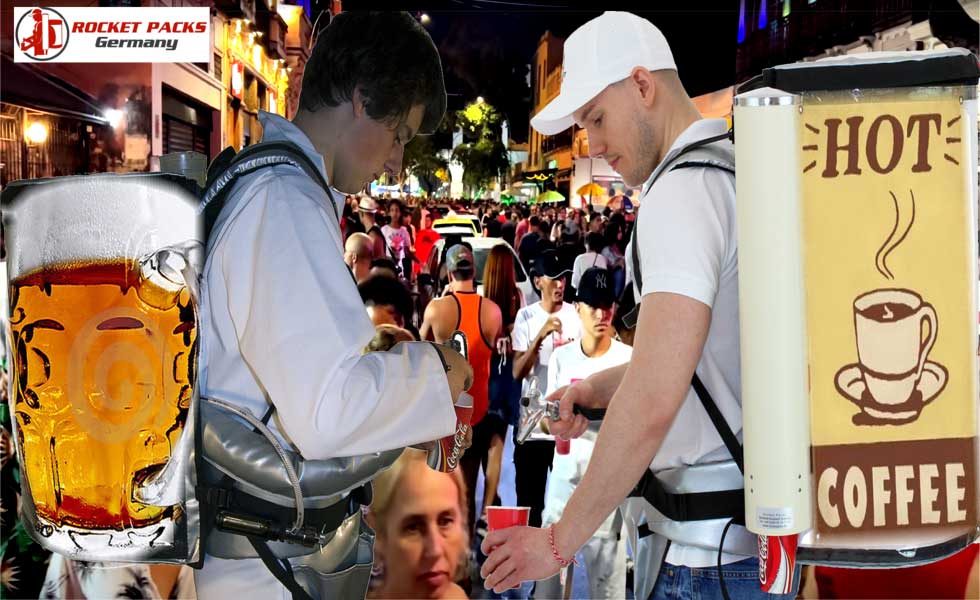
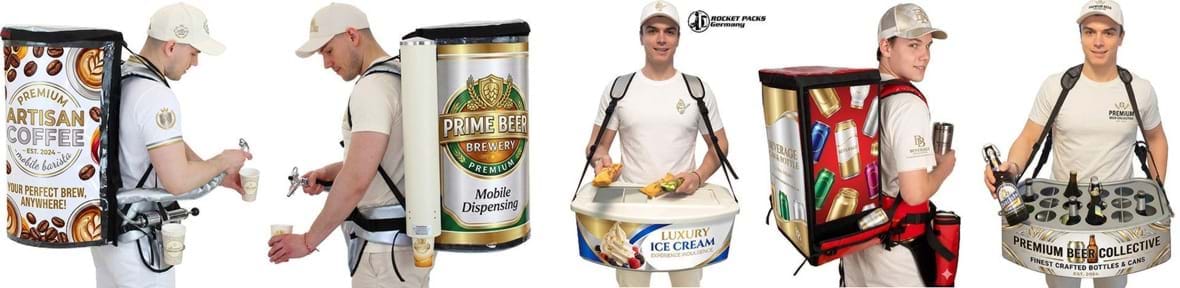
A professional beverage backpack must be configured for the drink, filling method and planned service process. The following answers explain how the individual components work together and which preparations are required before the backpack is used at an event.
What distinguishes a professional beverage backpack from a conventional drinks carrier?
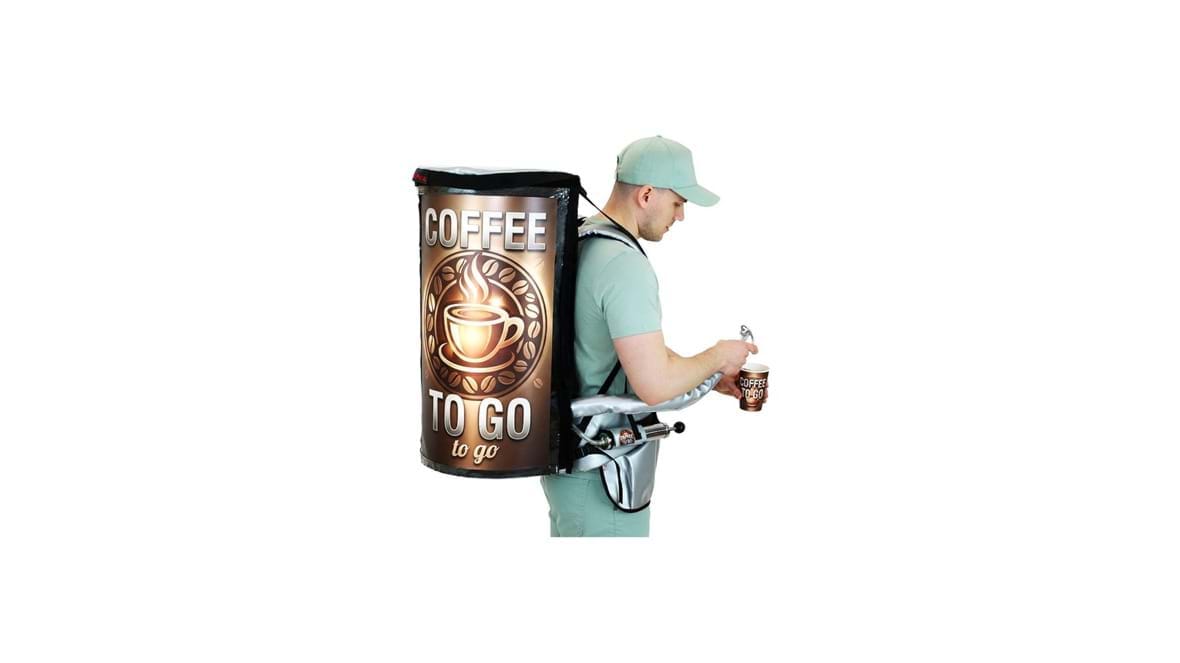
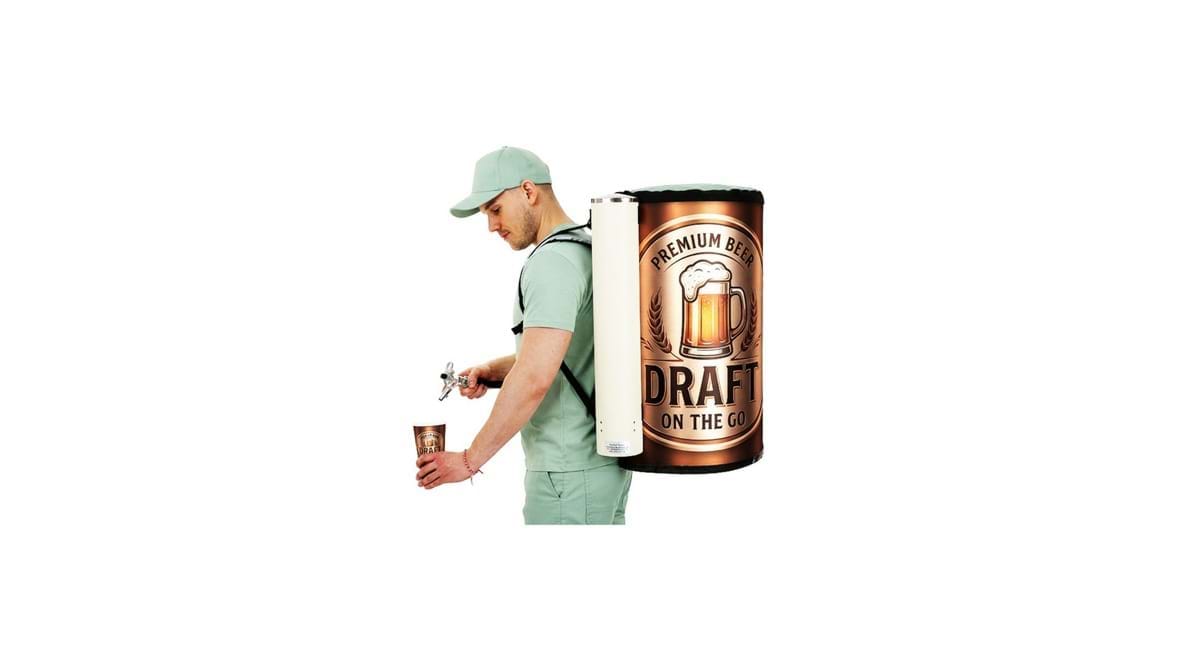
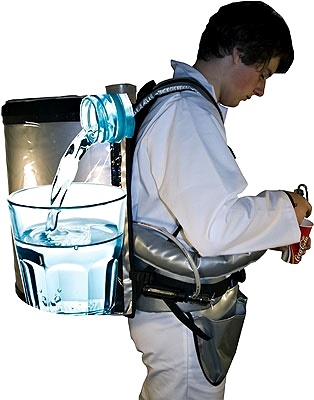
A professional beverage backpack contains a beverage container connected to a hose and dispensing tap. The wearer can therefore pour individual servings directly from the carried supply.
A conventional carrier transports packaged drinks but does not include a complete liquid path for dispensing from an internal tank.
Which components make up a complete beverage backpack?
The exact equipment depends on the selected model and beverage. A complete configuration may include:
- Food-compatible beverage container
- Insulated backpack cover
- Shoulder straps and waist belt
- Beverage hose and fittings
- Standard or compensator tap
- Manual pump or compatible CO2 equipment
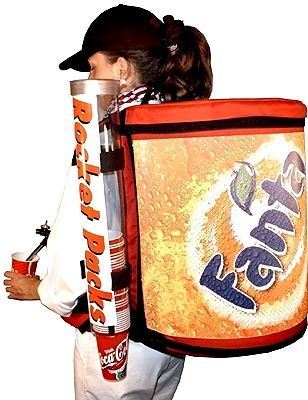
- Cup dispenser
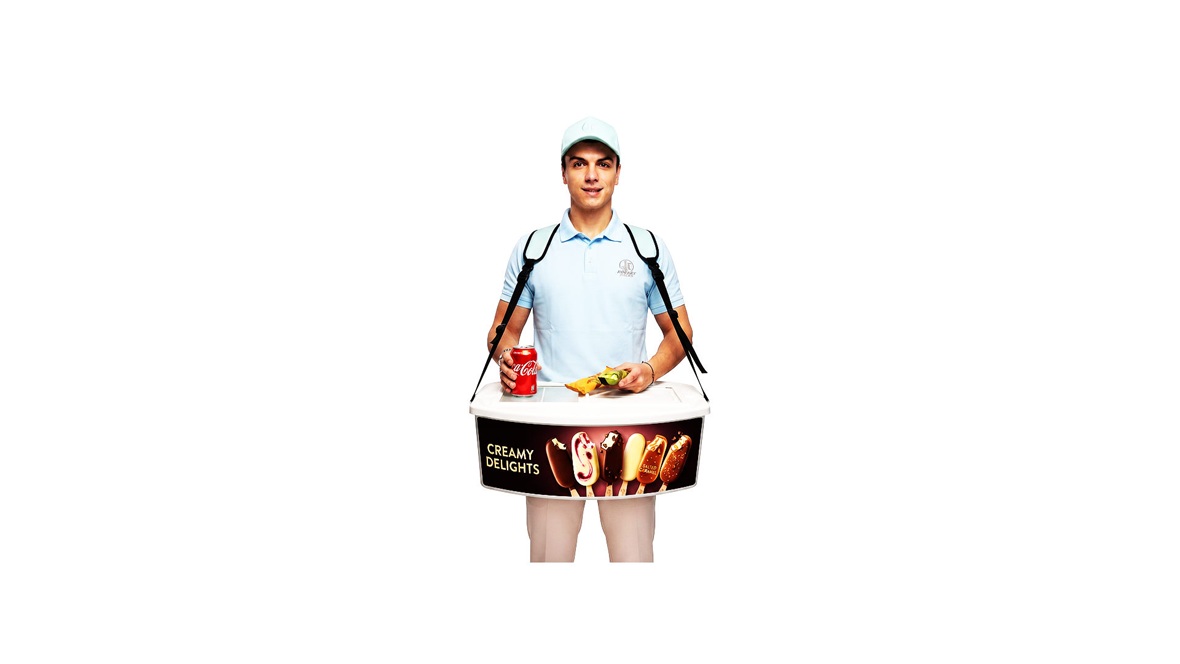
- Vendor apron or other service accessories
Only the components expressly stated in the quotation form part of the ordered configuration.
How is the beverage transported from the container to the tap?
The beverage leaves the container through an outlet and travels through a connected hose to the hand-operated tap. The required operating principle depends on whether the drink is still or carbonated.
The container, hose, fittings and tap must form one compatible beverage path.
What does gravity-fed dispensing mean?
In a gravity-fed configuration, a suitable still beverage flows from the elevated container to the tap without an additional pressure source.
This operating method can be used for sufficiently fluid non-carbonated drinks such as filtered coffee, tea, water or still soft drinks.
What does pressure-assisted dispensing mean?
A pressure-assisted system uses a compatible hand pump or CO2 supply to move the beverage from the container through the hose and tap.
This configuration is required for beer, cola and other carbonated beverages. Pressure equipment must only be combined with a container designed for this purpose.
Why must the complete configuration be selected before individual accessories?
A tap, pump or filling line cannot be selected reliably without knowing the beverage container and intended drink. Similar-looking fittings may have different connections or operating requirements.
The tank, pressure source, hose and dispensing components should therefore be assessed as one system.
Can pressure equipment be added to any beverage container?
No. A gravity container should not be converted into a pressurized system simply by attaching a pump or gas supply.
The container, closure, fittings and other components must be suitable for the intended pressure operation.
Why is free space required in a container for carbonated drinks?
A pressurized beverage container must not automatically be filled to its complete nominal capacity. Sufficient space above the liquid is required for controlled pressure operation.
The permitted filling volume for the selected container should be used when calculating the number of servings.
Can beverages be mixed directly inside the backpack container?
The drink should normally be prepared and mixed completely before filling. This allows the recipe, temperature and consistency to be checked outside the backpack.
Undissolved powder, loose ingredients or solid particles can settle inside the container and obstruct the outlet, hose or tap.
How is an open-fill beverage container filled?
The backpack is removed from the wearer and placed securely at the preparation station. The container closure is opened, and the prepared beverage is transferred using a clean jug or suitable funnel.
The container should not be filled while the backpack is being worn.
How is a backpack filled from a commercial beverage keg?
A suitable filling or overflow line may be required when beer or another beverage is supplied from a keg. The accessory must match the keg coupler, beverage outlet and backpack container.
Photographs or technical details of the existing keg connection should be provided before filling equipment is selected.
Why should the beverage hose remain as unrestricted as possible?
A kinked, compressed or incorrectly routed hose can reduce or interrupt the beverage flow. It may also make the dispensing result less consistent.
The hose should be positioned so that it remains free while the backpack is worn and does not catch on surrounding objects.
What is the purpose of a compensator tap?
A compensator tap allows the operator to regulate the flow rate at the dispensing point. This can provide additional control when serving carbonated drinks or using different cup sizes.
The compensator does not measure an automatic portion and cannot correct an unsuitable beverage temperature or pressure setting.
When is a standard tap sufficient?
A standard tap can be suitable for uncomplicated gravity-fed service with a still, sufficiently fluid beverage.
The operator opens and closes the tap manually. The preferred version depends on the beverage and the amount of flow control required during service.
Why should the complete system be tested for leaks?
A leak can occur at the container closure, hose, fitting or tap. Every connection should therefore be inspected after filling and before the backpack enters the customer area.
Service must be stopped if liquid or gas escapes from an unintended point.
Should a functional test be carried out with water or with the actual beverage?
Water can be used after cleaning to check whether the liquid path is open and whether connections are visibly leaking.
A final test with the intended beverage is still recommended because carbonation, temperature, sugar and other ingredients can change the dispensing behaviour.
How should hot beverages be prepared for the backpack?
Hot drinks must reach the required serving temperature before filling because the backpack does not contain an active heater.
A clean stainless-steel container can be preheated with hot water before the beverage is added. The preheating water must be removed completely before filling.
How should cold beverages be prepared?
Cold drinks should be pre-chilled before they are transferred into the container. The backpack insulation slows down temperature change but does not actively refrigerate the beverage.
The prepared system should not remain unnecessarily in direct sunlight or another warm location before service.
Why can the same beverage behave differently at separate events?
Ambient temperature, initial beverage temperature, movement, filling quantity, pressure and service duration can all influence the dispensing result.
A configuration tested indoors may therefore require another operational adjustment when it is used outdoors under warmer conditions.
How does the filling quantity affect the wearer?
Every litre of beverage adds approximately one kilogram to the carrying load. Cups, pressure equipment and accessories add further weight.
The selected filling quantity should therefore match the physical suitability of the wearer, walking distance and planned service period.
Why should the harness be adjusted after filling?
The weight distribution of a filled backpack differs from that of an empty system. The shoulder straps and waist belt should be adjusted so that the load sits close to the body and remains stable.
The final fit should be tested with the expected operating quantity before the event begins.
Can several employees use the same beverage backpack?
Yes. Each operator must be instructed in filling, carrying and dispensing, and the harness must be readjusted whenever the wearer changes.
The new operator should also be informed about the beverage, remaining quantity and next planned refill.
What should be checked before each mobile service period?
- Correct beverage and filling quantity
- Secure container closure
- Tight hose and pressure connections
- Controlled beverage flow
- No visible leakage
- Correctly adjusted carrying straps
- Sufficient clean cups
- Clean exterior surfaces and dispensing tap
The backpack should only be issued after the complete system has been inspected.
How should a professional refill station be organized?
The refill station should be located away from visitor traffic and provide a stable surface for removing and preparing the backpack.
It should contain the prepared beverage, clean filling equipment, cups, required accessories and materials for wiping or cleaning minor spills.
Can a prepared replacement backpack reduce interruptions?
A second prepared system may be useful when one backpack is being refilled, inspected or transferred to another operator.
Whether a replacement unit is necessary depends on the expected beverage demand, distance to the refill point and number of service zones.
How can beverage consumption be documented?
The operator can record each filling before the backpack leaves the preparation station. This supports stock control and helps plan later service periods.
- Backpack identification
- Beverage name
- Quantity filled
- Time issued
- Assigned operator
- Assigned service area
- Time returned or refilled
Can two different beverages be served from one standard backpack?
A standard single-container backpack carries one beverage at a time. Separate systems are normally the clearest solution when different drinks must be served simultaneously.
This also simplifies product identification, allergen management and cleaning.
How can product confusion be prevented?
Every backpack, container and filling vessel should be labelled clearly with the beverage it contains. The same product names should be used by the preparation team and the mobile operators.
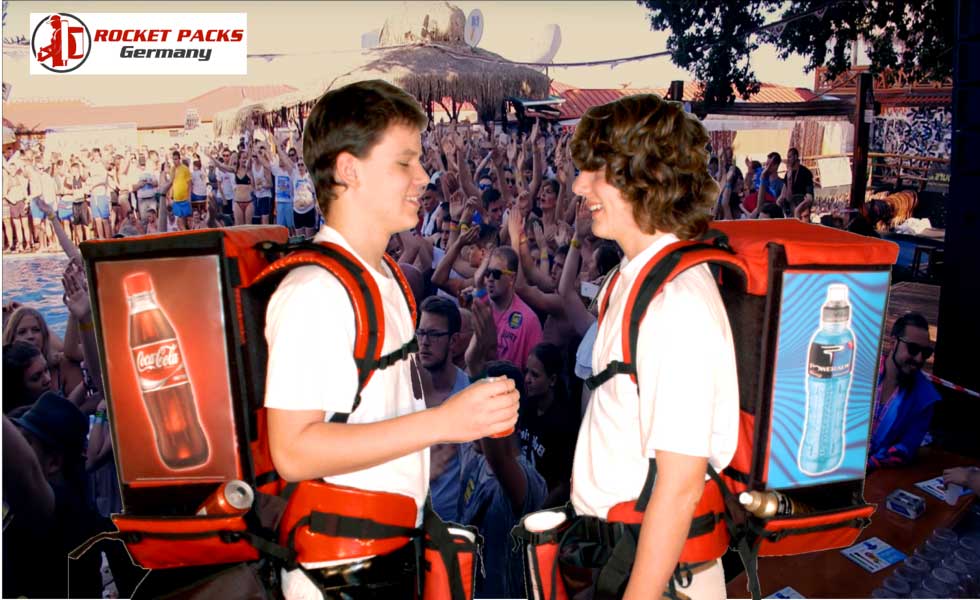
Different poster inserts or identification tags can provide additional visual separation.
Which cups can be carried in the universal cup dispenser?
The universal dispenser is suitable for many disposable and reusable cups with capacities from approximately 100 to 550 millilitres and outside rim diameters of approximately 60 to 95 millimetres.
The cup shape must also be considered. Cups with handles or unusual rims may require another carrying solution.
Are cups, lids and ingredients included with the backpack?
No. Cups, lids, napkins, milk, sugar, syrup and other consumable items are normally organized by the customer.
A sample cup should be checked before a large quantity is purchased for the event.
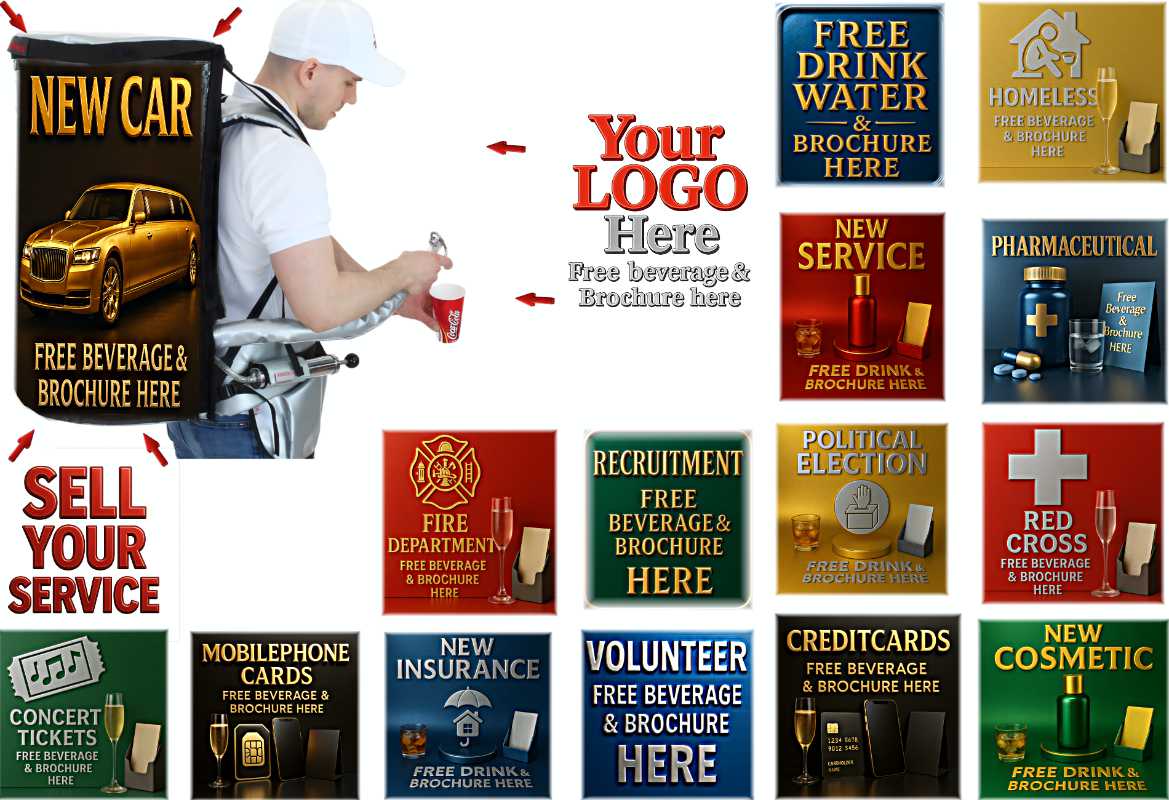
Can promotional material be displayed on the backpack?
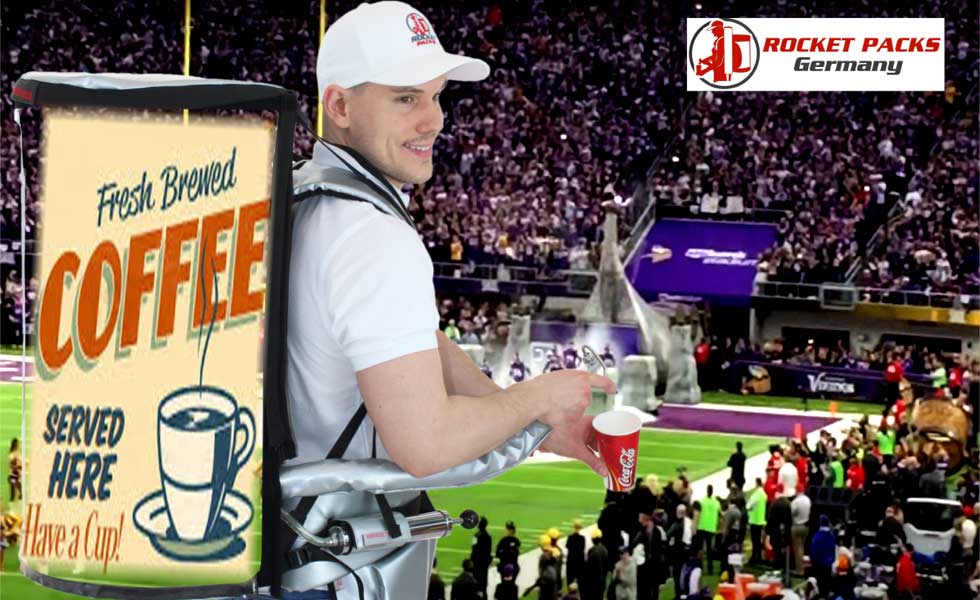
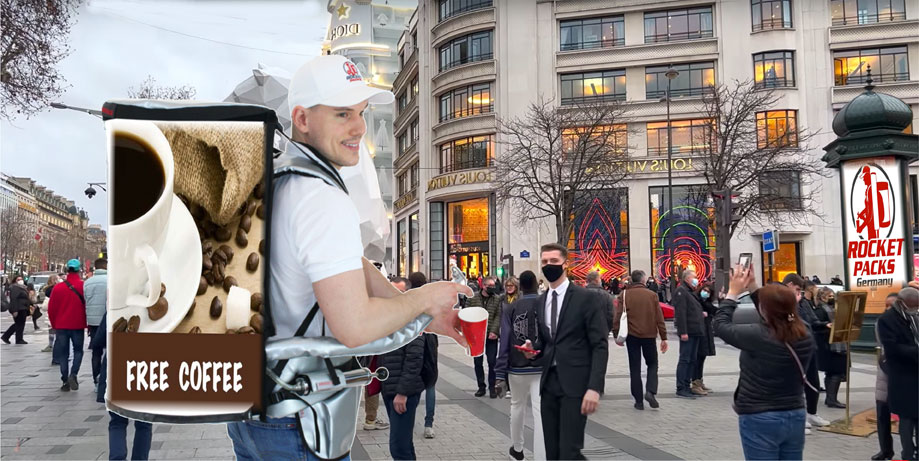
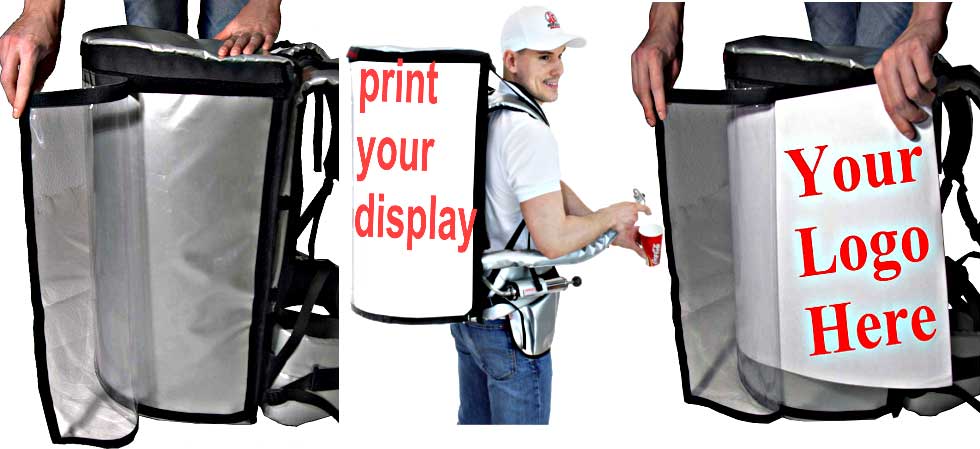
Depending on the selected model, printed paper graphics can be inserted behind transparent display surfaces. These can present a beverage brand, sponsor, product name or campaign message.
The confirmed visible dimensions should be obtained before artwork is prepared. Graphic design and printing are not automatically included.
Which components require regular inspection?
The container closure, seals, beverage hose, fittings, tap and carrying straps should be checked before and after use.
Cracked hoses, damaged seals, loose fittings or a tap that no longer closes reliably should be assessed before the system returns to service.
How should the beverage path be cleaned?
The remaining beverage should be emptied before residue can dry. The container, outlet, hose, connectors and internal tap passages must all be included in the cleaning process.
A suitable beverage-system cleaning product can be used according to its instructions. Afterwards, rinse the complete liquid path thoroughly with clean water.
Why is cleaning only the container insufficient?
The beverage also contacts the hose, fittings and internal parts of the tap. Residue can remain in these components even when the visible inside of the container appears clean.
Cleaning and rinse water must therefore pass through the entire beverage path.
What does Rocket Packs supply for a professional project?
Rocket Packs supplies the selected beverage backpack and the components expressly listed in the quotation.
The customer normally organizes the beverage, preparation equipment, cups, operating staff, payment method, local permissions and service procedure at the venue.
What information is required for a professional beverage backpack quotation?
Please describe the complete application rather than providing only a desired container size.
- Type and brand of beverage
- Relevant ingredients and consistency
- Still or carbonated drink
- Hot or cold service
- Required number of backpacks
- Preferred capacity or expected serving volume
- Available filling or keg connection
- Manual pump or CO2 preference
- Cup capacity, rim diameter and shape
- Required accessories
- Indoor or outdoor venue
- Expected duration of each service period
- Requested delivery date
- Destination country, postal code and city
If no model has yet been selected, describe the venue, walking route, expected beverage demand and available refill facilities. This information helps us assess a suitable configuration.